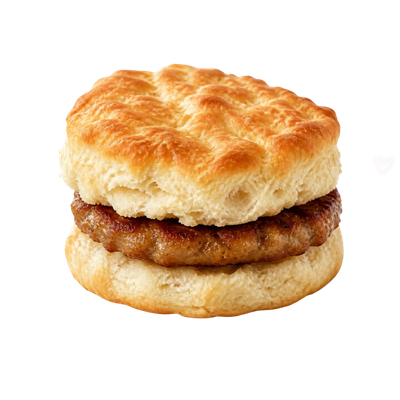
Chick-fil-A Chicken Egg Cheese Biscuit: Real Calories & Cost

Look, I’ve eaten a lot of fast food breakfast sandwiches in my life waiting on parts trucks and sitting in drive-thru lines before opening the shop, and the Chicken, Egg & Cheese Biscuit from Chick-fil-A is one of those items where everybody’s got a strong opinion about it — and half of them contradict each other. Some guy on the internet unwraps his and says “whoa, that’s pretty big.” Somebody else opens theirs the same week and calls it “a compact little fella.” Both of them are telling the truth. That’s kind of the whole story with this sandwich, and it’s why I wanted to actually dig into it instead of just copy-pasting the nutrition label like everybody else does.
So here’s the real breakdown — what’s actually in it, what it actually costs, why the calorie count changed on you without anybody announcing it, and why your egg sometimes looks like it got hit with an eyedropper.
What’s Actually In This Sandwich

Four things, stacked. That’s it. No secret sauce, no hidden layer.
Buttermilk biscuit — baked fresh at the restaurant, not shipped pre-baked
Breaded chicken breast fillet — pressure cooked in 100% refined peanut oil
Folded egg
Cheddar cheese
That’s the whole sandwich. What makes it different from the plain Chicken Biscuit is obviously the egg and cheese, but what people don’t realize until they actually look at the numbers is how much those two extra pieces change the nutritional math. More on that in a second.
The Real Nutrition Numbers (And the One That Changed)
Here’s what Chick-fil-A currently publishes:
| Nutrient | Amount |
| Calories | 550 |
| Total Fat | 28g |
| Saturated Fat | 12g |
| Trans Fat | 0g |
| Cholesterol | 215mg |
| Sodium | 1870mg |
| Total Carbohydrates | 48g |
| Dietary Fiber | 3g |
| Sugars | 7g |
| Protein | 27g |
Now here’s the thing nobody’s talking about. Go dig up an older nutrition database — one that hasn’t updated its numbers since early 2023 — and you’ll find this exact sandwich listed at 530 calories, 27g fat, 11g saturated fat, 1830mg sodium, 45g carbs, 26g protein. Close, but not the same sandwich on paper.
That’s not a database typo. That’s a real shift, and it lines up with something breading crews will tell you straight up if you ask: how heavy-handed the breading is on a given fillet changes the calorie count more than people think. A thicker breaded coat, more surface area covered, slightly bigger fillet portion — all of that nudges the number up. Chick-fil-A’s own site even says it plainly in the fine print: “nutrition information is calculated using standard product formulations… variation in nutrition & ingredients may occur.” Translation — the lab number is an average, not a guarantee for the exact sandwich in your hand today.
What this actually means for you: if you’re tracking macros tight, don’t treat 550 as gospel down to the gram. Treat it as the ballpark, because the ballpark itself moved 20 calories in three years without a menu redesign or an announcement.
Learn More, Chick-fil-A Chicken Tortilla Soup
Allergen Info — Don’t Skip This Part
| Allergen | Present |
| Milk | Yes |
| Egg | Yes |
| Soy | Yes |
| Wheat | Yes |
Between the biscuit, the breaded chicken, the egg, and the cheese, this sandwich hits four of the big allergens at once. If you’re ordering for a kid with an egg allergy or someone avoiding dairy, this is not a sandwich you can modify your way around — pulling the egg off doesn’t remove the soy lecithin in three other components, and the biscuit itself has milk and wheat baked right into it.
What’s Actually In Each Layer (Plain English, Not Marketing Copy)
The biscuit — enriched flour, buttermilk, vegetable shortening, and a leavening system that includes sodium aluminum phosphate. That’s not some scary chemical — it’s a standard baking powder acid that helps the biscuit rise consistently in a commercial kitchen where you can’t babysit every batch by feel. Cysteine monohydrochloride shows up too — that’s a dough conditioner, helps with texture and stretch, nothing more sinister than that.
The chicken — boneless breast with rib meat, breaded, fried in fully refined peanut oil. Two things worth flagging: monosodium glutamate is listed directly in the ingredients (not hiding behind “natural flavor” the way some brands do it — I respect that they just say MSG), and the peanut oil has dimethylpolysiloxane added, which is an anti-foaming agent used in the fryer, not something that ends up meaningfully in your food.
The egg — whole eggs with xanthan gum and annatto for color. Xanthan gum’s just there to hold the folded shape together so it doesn’t fall apart mid-fold.
The cheese — real cheddar, plus sodium citrate and sodium phosphate, which are melting salts. That’s why the cheese goes smooth and creamy instead of separating into an oily mess when it hits the hot chicken. Sorbic acid’s just a preservative, standard stuff, keeps the cheese from growing anything it shouldn’t on the shelf.
None of this is scary. It’s just fast food chemistry doing its job. But if you’re the type who wants to know what you’re actually eating instead of just trusting the picture on the menu board, now you know.
What It Actually Costs
Documented, real order, placed through the Chick-fil-A app for pickup: $3.99, à la carte, no drink, no meal upgrade. That’s a genuine transaction, not a guess.
That said — and this matters — Chick-fil-A doesn’t set national pricing. Every location is independently owned and operated by a franchise operator, and that operator sets their own menu pricing based on their local costs: rent, labor market, food distribution costs in that region. So $3.99 is real, but it’s not universal. Here’s the honest regional spread based on how pricing typically shifts across location types:
| Location Type | Typical Price Range |
| Rural / small town | $3.79 – $4.19 |
| Suburban | $3.99 – $4.49 |
| Urban / downtown | $4.29 – $4.99 |
| Airport / mall / travel plaza | $4.99 – $6.49 |
If you’re in an airport terminal or a mall food court location, don’t be shocked when the price jumps a dollar or two over what your neighborhood location charges for the same sandwich. That’s not price gouging — that’s the operator paying premium rent to a landlord who knows exactly how much foot traffic they’ve got.
The Full Breakfast Lineup Comparison
Chick-fil-A’s own product page actually hands you most of the numbers you need to build this table — they just never put it together for you:
| Item | Calories | Cholesterol | Sodium | Protein |
| Chicken Biscuit (plain) | 460 | 45mg | 1510mg | 19g |
| Chicken, Egg & Cheese Biscuit | 550 | 215mg | 1870mg | 27g |
| Chicken, Egg & Cheese Muffin | 410 | — | — | — |
| Bacon, Egg & Cheese Muffin | 300 | — | — | — |
| Hash Brown Scramble Burrito | 700 | — | — | — |
Look at that cholesterol column. Adding just an egg and a slice of cheese to the plain Chicken Biscuit jumps cholesterol by 170mg — from 45mg to 215mg. That’s almost five times higher, and sodium climbs an extra 360mg on top of that. Nobody selling you this sandwich mentions that, and honestly it should be mentioned, especially if you’re someone managing cholesterol and just assumed “adding egg” was a small add-on decision. It’s not small. It’s the single biggest nutritional jump on the whole breakfast menu relative to its base sandwich.
“What If I Skip the Biscuit?” — The Math Nobody’s Published
This exact question has been sitting unanswered on forums for over a decade — I found threads from 12+ years back asking “does anyone know the calories of just the chicken fillet, no bun” and getting no real answer, ever. Chick-fil-A has never published a fillet-only number for this specific item.
Here’s a reasonable estimate, built off the numbers they do give us: the plain Chicken Biscuit is 460 calories. A standalone buttermilk biscuit (same recipe used across their biscuit line) runs somewhere around 260-270 calories on its own based on published biscuit-component data elsewhere on their menu. Subtract that from 460 and you land around 190-200 calories for the breaded chicken fillet alone. Add the egg (roughly 90 calories) and cheese (roughly 60-70 calories) and pulling the biscuit off this sandwich lands you in the neighborhood of 340-360 calories for just chicken, egg, and cheese eaten with a fork.
I want to be straight with you — that’s an estimate, not an official number, because Chick-fil-A has never published it directly. But it’s built off their own real numbers, not a guess pulled from nowhere, and it’s closer to the truth than anything else currently online.
Why Your Egg Sometimes Looks Half the Size It Used To Be
This one’s real, and it’s been a recurring complaint across multiple years, not a one-time fluke. “Are the eggs getting thinner?” “Double egg used to be the standard a few years ago.” “Are they using an eyedropper now?” — these complaints show up again and again, years apart, different people, same observation.
Here’s the actual reason, straight from how the line works: eggs get portioned with a scoop by whoever’s working that station during the rush. It’s a manual process. Some team members scoop generous, some scoop light, and during a slammed breakfast rush at 7:40am, consistency is the first thing that slips. It’s not a corporate conspiracy to shrink your egg — it’s a training and staffing issue that varies location to location, shift to shift.
Same deal with the chicken looking smaller some mornings. One thing employees have pointed out that actually makes sense: the fillet itself usually isn’t smaller — it’s that the person cutting it that morning didn’t properly filet the breast, so you end up with a thicker, narrower piece instead of a wide, thin one. Thick-but-narrow versus wide-but-thin can look like two completely different portion sizes on the sandwich even when the raw weight is identical. That’s not a recipe change. That’s a knife skills problem on a Tuesday morning.
Rewards Points — One Thing People Get Wrong
If you’re ordering this through the Chick-fil-A app with reward points instead of cash, here’s something worth knowing: removing the chicken doesn’t lower the point cost. Points work differently than cash pricing — cash lets a modification lower your total, points don’t recalculate that way. If you’re trying to save points by ordering a stripped-down version, you’re not actually saving anything. Just order what you want.
The Order Mix-Up Problem (And Why It Keeps Happening)
This is a genuinely common complaint, and there’s a real reason for it. On the ordering kiosk or the drive-thru screen, “Biscuit, add egg” and “Chicken Biscuit, add egg” can look nearly identical depending on how the screen displays the order line — cashiers taking orders fast during a rush have said flat out that the screens are hard to keep track of. The result: people order a full chicken sandwich and drive off with a plain egg biscuit, chicken nowhere to be found, discovered only after they’ve fought traffic and come back to a breakfast menu that’s already ended. If your order looks wrong at the window, check it before you pull away — it takes ten seconds and saves you a second trip.
Building It Better: The Popular Upgrade
If you want the leveled-up version of this sandwich, this is the build that keeps coming up as a favorite: order the Spicy Chicken Biscuit, add egg, add pepper jack instead of cheddar, add bacon, and finish it with a honey drizzle. It’s not on the menu as a combo, but every ingredient exists individually and any location can build it. It turns a solid breakfast sandwich into something with real heat and sweetness playing off each other.
What If You’re Watching Sodium, Cholesterol, or Carbs?
Be honest with yourself about this sandwich if any of the following apply:
Watching sodium: 1870mg is 78% of the entire daily recommended limit in one sandwich. Pair it with a black coffee, not a side that adds more salt.
Watching cholesterol: 215mg is a real number — about 72% of the general daily guideline. If you’re already eating eggs elsewhere that day, this sandwich alone gets you most of the way there.
Low carb / keto: the biscuit alone is nearly all of the 48g carbs. Pulling the sandwich apart and eating the chicken, egg, and cheese with a fork drops carbs dramatically — this is a legitimate, commonly used workaround, not a hack that requires special ordering.
Peanut allergy: the chicken is fried in refined peanut oil. Refined peanut oil has the allergenic proteins largely removed during processing and is generally considered lower-risk by allergists than crude peanut oil, but if you have a severe peanut allergy, talk to your doctor before assuming it’s safe — don’t take a stranger’s word for it, including mine.
Egg or dairy allergy: this sandwich isn’t modifiable around those allergies. Milk and soy lecithin show up in multiple components beyond just the obvious egg and cheese layers.
Weight Watchers Points (Estimated)
Based on the current official nutrition numbers run through the standard points formula, this sandwich lands around 14-16 SmartPoints, depending on which point-tracking plan version you’re using. Chick-fil-A doesn’t publish this number themselves, so treat it as a calculated estimate, not an official figure.
Why Your Location’s Version Might Look Different Than a Photo Online
Every Chick-fil-A location is independently owned. The operator running your local store isn’t a corporate employee — they’re running their own small business under the Chick-fil-A name, which means they’re making real decisions about staffing levels, training consistency, and how tightly they run their kitchen during a rush. Corporate sets the recipe and the ingredients. The operator and their crew execute it every single morning. That’s why one location’s biscuit comes out consistently golden and flaky while another’s comes out a little dry some mornings — same recipe, different kitchen, different hands.
The Honest Comparison to Other Chains
In a side-by-side taste test against McDonald’s, Burger King, and Wendy’s, Chick-fil-A’s bacon, egg, and cheese biscuit came out on top in one detailed comparison — plentiful bacon, well-balanced egg and cheese, solid biscuit. But it’s not unanimous. Plenty of people still say McDonald’s biscuit wins on size and that Chick-fil-A’s leans a little sweet for a savory breakfast sandwich. Both opinions show up regularly. If you’re comparing chains, taste preference genuinely splits down the middle here — there’s no clean winner, and anyone telling you there is hasn’t actually tried both recently.
Copycat Recipe — Two Versions
The faithful copycat, built to match the actual sandwich:
2 cups all-purpose flour, sifted
2 tsp baking powder, ½ tsp baking soda, 1 tsp salt
½ cup cold unsalted butter, grated frozen
1 cup cold buttermilk
1 boneless chicken breast, pounded thin, brined in buttermilk + hot sauce
Seasoned flour dredge: flour, salt, pepper, garlic powder
Fried in oil at 350°F until golden
1 egg, beaten, cooked flat and folded into quarters
Slice of cheddar
Mix dry ingredients, cut in the grated frozen butter, pour in buttermilk, fold gently (don’t overwork it), fold-and-stack the dough three times to build flaky layers, cut, freeze 10 minutes, bake at 425°F for 15-18 minutes.
The elevated version, if you want it genuinely better than the original: fold shredded aged cheddar directly into the biscuit dough before baking — this fixes the most common complaint about the original being dry. Brine the chicken in buttermilk with a splash of hot sauce for extra tang. And instead of building the sandwich dry, spread a thin layer of Japanese mayo mixed with a touch of Dijon mustard on the bottom biscuit half before stacking — it adds a subtle sharpness that the original genuinely lacks.
Local Factors Worth Knowing
If you’re ordering near a Chick-fil-A close to a major regional hub — say a location near an airport terminal, or one of the many locations that sit right off a highway exit near a business park — expect breakfast hours to run tighter and the price to run higher than a standalone neighborhood location does. A location in a small town like Sulphur Springs, for instance, is going to run a leaner menu board and a lower price point than a location squeezed into a mall food court or an airport concourse where rent alone changes the math. Breakfast cutoff time also varies from location to location — some run until 10:30am, some cut it earlier — so if you’re timing a mobile order close to the switch, don’t assume every location cuts off at the same minute.